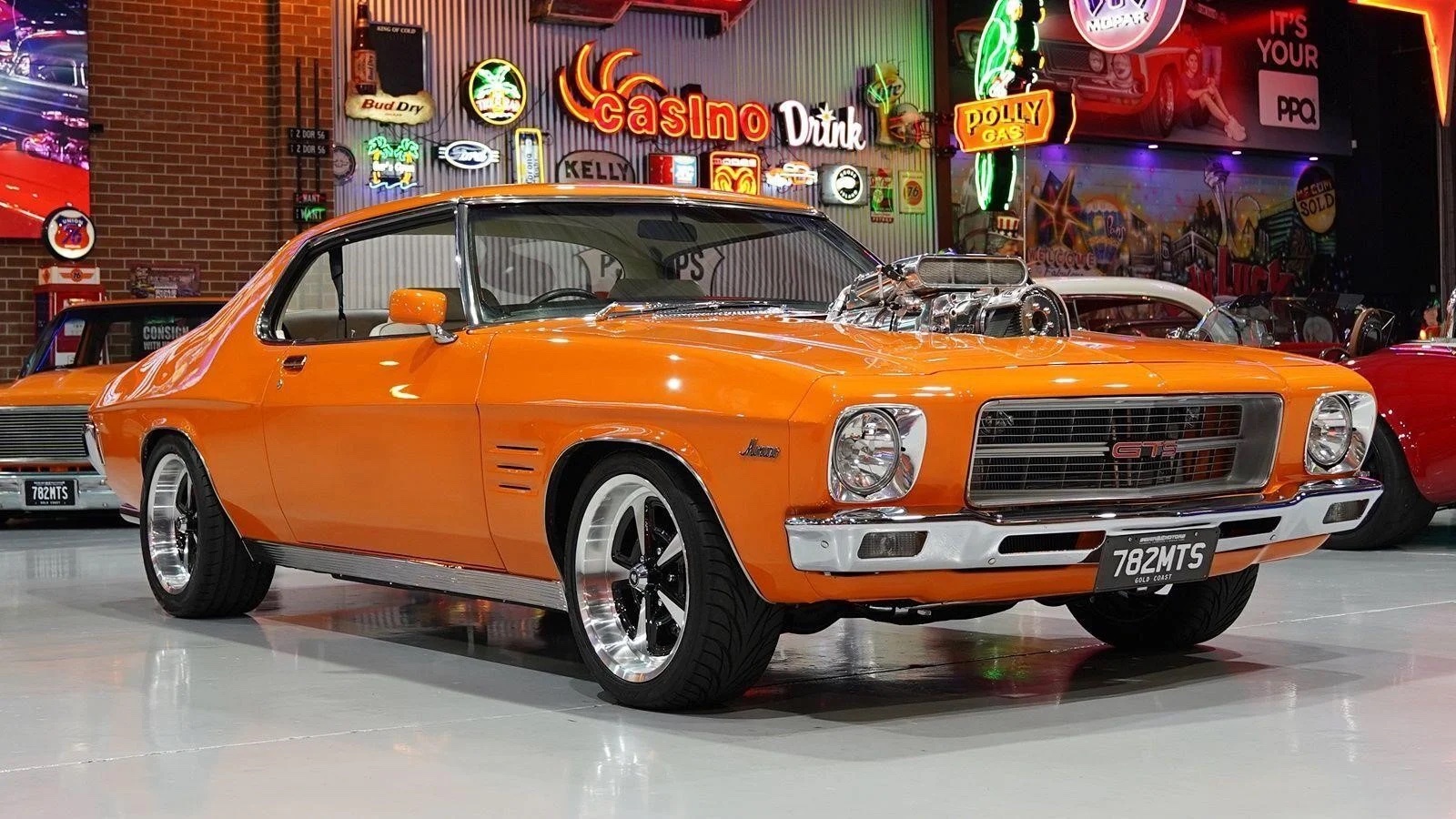
The Walkinshaw existed for one reason only: to get Holden onto the grid under Group A homologation rules and take the fight to Bathurst in the Australian Touring Car Championship.
The rulebook required at least 500 road going cars before the race version could compete. Strong demand saw Holden Special Vehicles produce 750 examples between 1987 and 1988. This demand has never faded, more than three decades on the VL Walkinshaw still ranks among Australia’s most sought after muscle cars.
%20copy(5).jpg) Picture: Holden Special Vehicles
Picture: Holden Special Vehicles
VL Walkinshaw: A Detailed Look
Developed in Melbourne by Holden Special Vehicles in partnership with Tom Walkinshaw Racing, this was the very first car to wear the HSV badge.
The VL Walkinshaw was built to homologate the VL Commodore SS Group A SV for international Group A competition. Launched in 1988, it was designed to compete against turbocharged Nissan Skylines and Ford Sierras dominating touring car racing at the time.
.jpg)
.jpg) Picture: Seven82Motors. Classics, Lowriders & Muscle Cars.
Picture: Seven82Motors. Classics, Lowriders & Muscle Cars.
The car also introduced aggressive aerodynamic solutions rarely seen on an Australian road vehicle. Its purpose was clear. Meet the regulation numbers, improve stability at speed and win races.
That alone makes it a landmark in Australian motoring history.
Body Kit
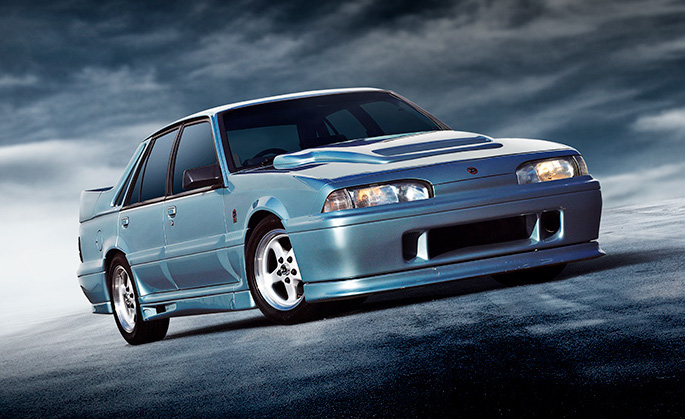
Every Holden VL Commodore SS Group A SV Walkinshaw left the factory finished in Panorama Silver and fitted with a wind tunnel developed body kit.
The aerodynamic package consisted of 26 separate fibreglass components. It included an extended front spoiler, bonnet bulge, side skirts, rear bumper extensions and the distinctive twin rear wing assembly. These changes were engineered to manage airflow around, through and under the vehicle, improving high speed stability. They were not cosmetic additions.
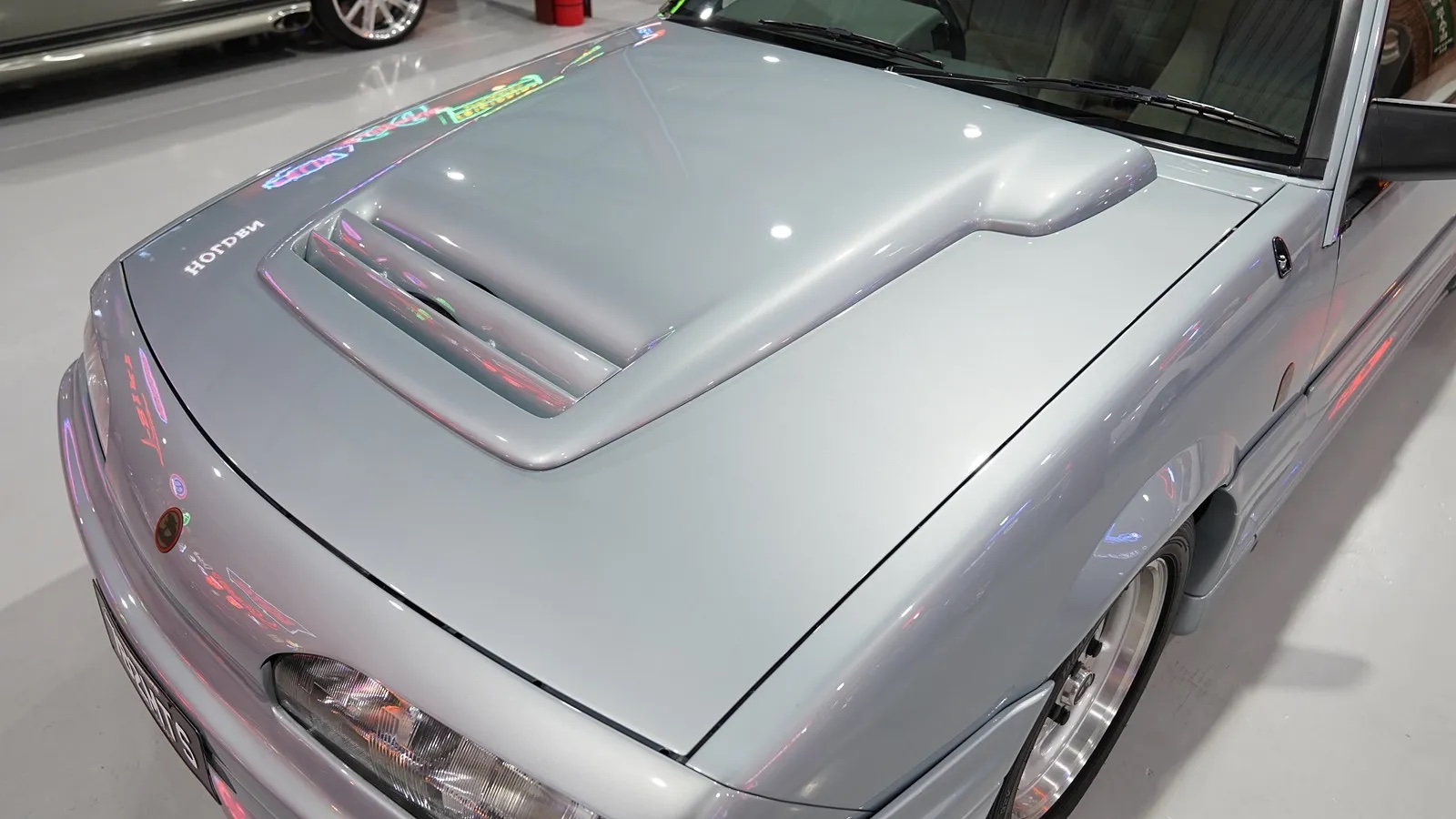
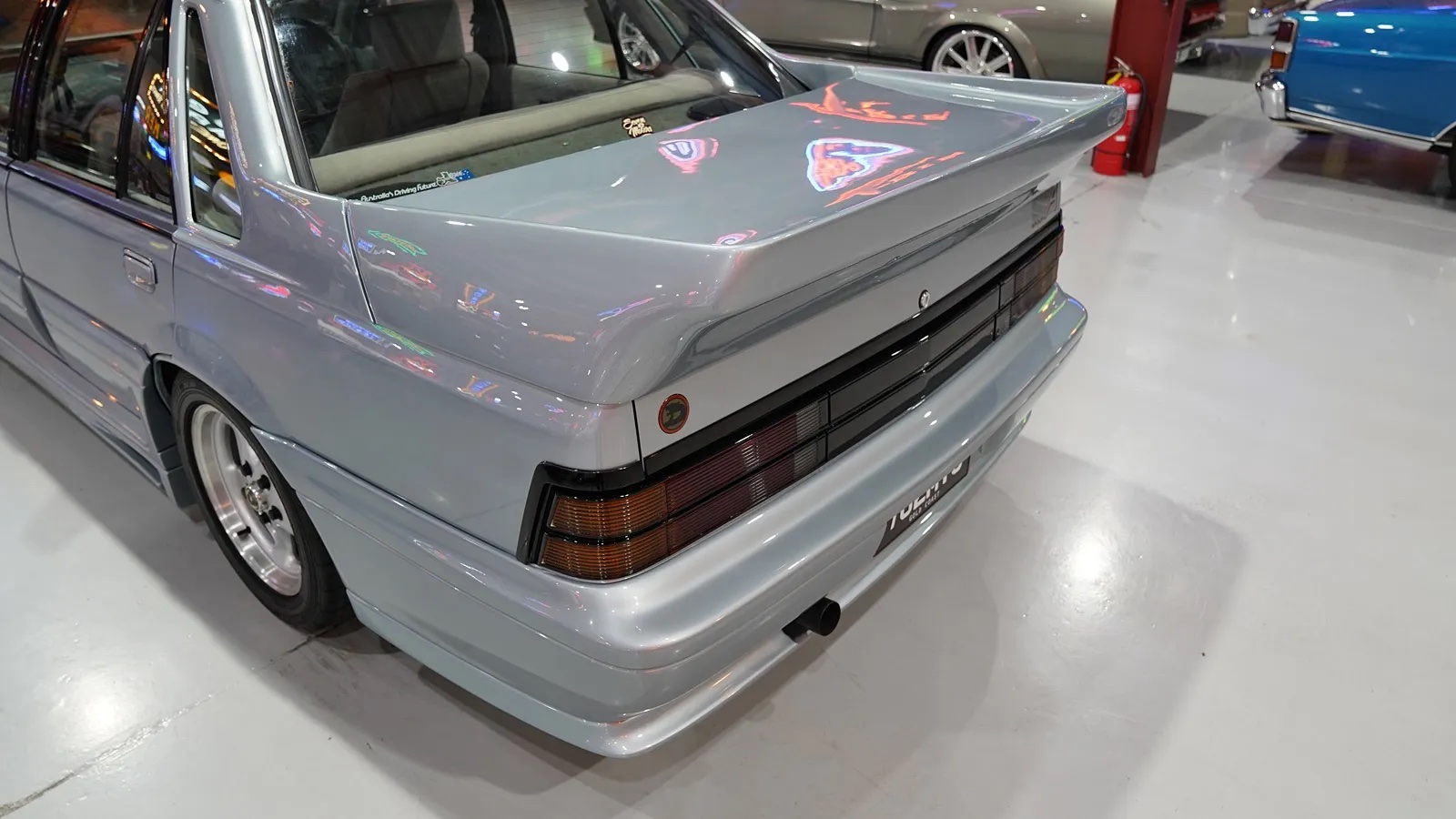
The process was led by Peter Stevens under the direction of Tom Walkinshaw Racing in partnership with Holden.
The result was a drag coefficient of approximately 0.314, a significant reduction compared to the standard VL Commodore.
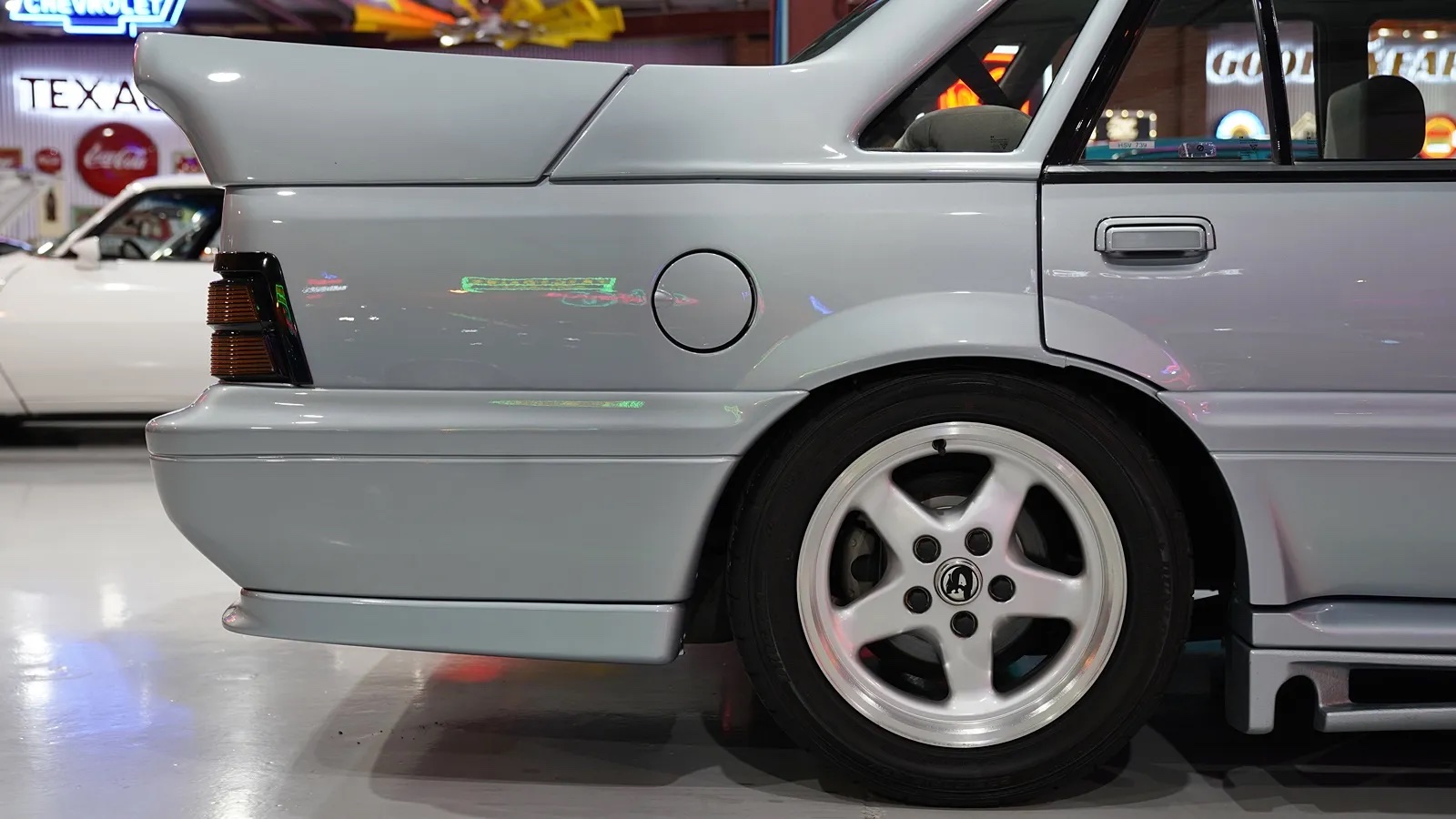
Its bold appearance earned it the nickname Plastic Pig, and sometimes Batmobile. Regardless of opinion, the body kit was functional and central to its Group A purpose.
Fuel Injected Engine
Under the bonnet sat a fuel injected 5.0 litre Holden V8 strengthened for competition use. Output was approximately 180kW and 380Nm of torque, strong figures for a late 1980s Australian production vehicle.
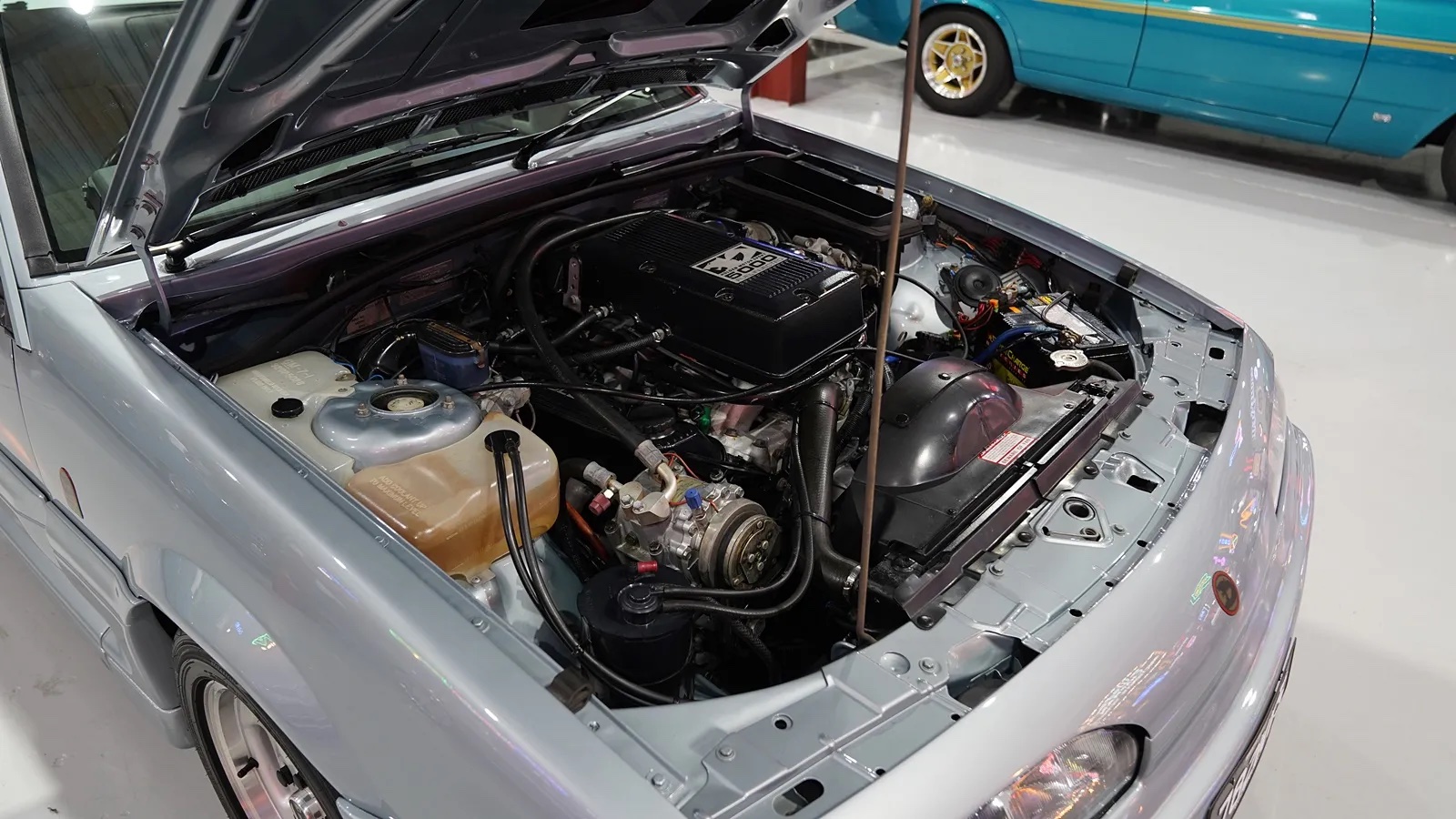
It was also the first locally produced Holden V8 fitted with electronic fuel injection, marking an important step in Holden performance development.
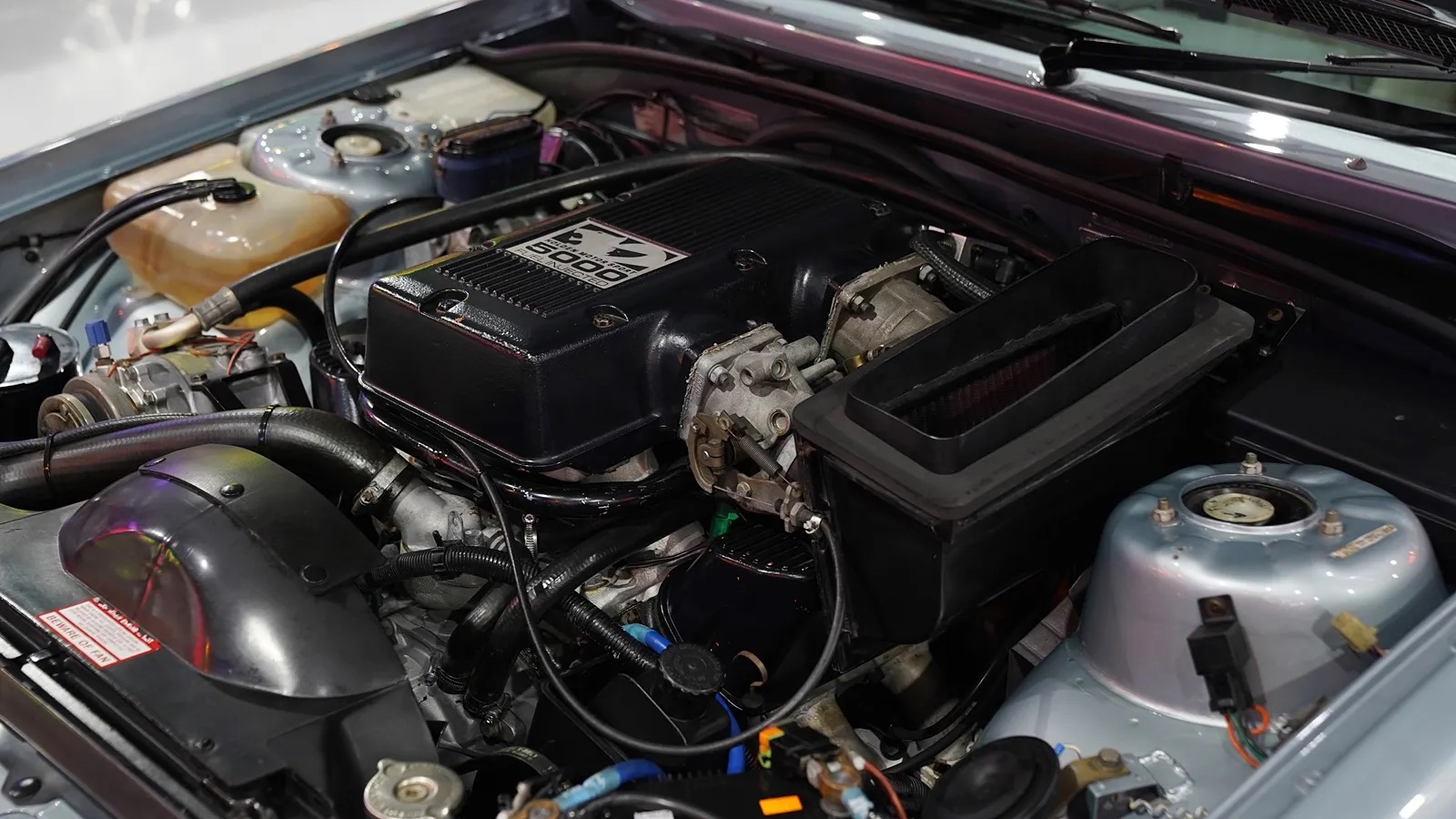
Performance figures included 0 to 100 km per hour in around 6.5 to 7.0 seconds, with a top speed estimated between 230 and 240 km per hour. Kerb weight ranged from 1,360 kg to 1,415 kg depending on specification.
It was a genuine Group A homologation model built so Holden could compete on equal terms. Peter Brock had defined the earlier era through the Holden Dealer Team, but the Walkinshaw signalled the start of HSV’s performance division.
If you were watching Bathurst in the late 80s and early 90s, you will never forget it. Sitting low on the grid, wide across the track, it looked ready to race.
MODEL CAR RELEASE
Limited production numbers, racing pedigree and distinctive styling have kept interest in the VL Walkinshaw strong decades after release.
That continued demand is reflected in the diecast market.
When DDA Collectibles released their 1:24 scale HSV VL Walkinshaw and VL Commodore Calais range in August 2025, collectors responded immediately.
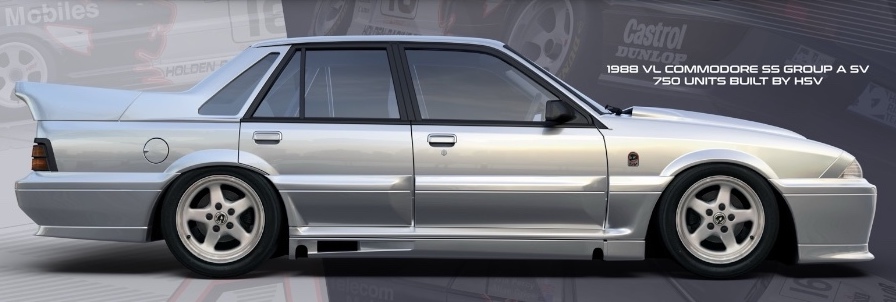
These diecast models range from factory correct Panorama Silver versions through to custom interpretations. Each release captures the defining features of the original SS Group A including the signature body kit and aerodynamic profile.
For enthusiasts who grew up watching the car compete, scale replicas offer a way to own a piece of that history.
Purple Supercharged HSV VL Walkinshaw
This is the latest release in the range and the very first supercharged HSV VL Walkinshaw model car produced by DDA Collectibles.
.JPG)
Release date: January 2026
Limited edition: 1,500 pieces
Colour: Deep Purple
Engine: Supercharged LS engine
Wheels: Custom low profile wheels
Chase variants: Only 3 to 5 percent of total production
Even though it is a custom creation, you can easily picture something like this turning heads at Summernats, with wide rear wheels and aggressive stance.
1988 HSV VL Commodore SS Group A SV Walkinshaw Panorama Silver
The 1988 Holden Special Vehicles VL SS Group A SV Walkinshaw, better known as the Walky, stands as HSV’s debut model and one of the most important Holden vehicles ever built.
.JPG)
Release date: August 2025
Colour: Panorama Silver
Engine: 5.0 litre Holden V8 engine
Wheels: Original 16 inch alloy wheels
Chase variants: Only 3 to 5 percent of total production
This diecast model replicates the original homologation road car complete with the factory body kit and race inspired styling. It forms part of the DDA Collectibles core range, meaning it is not a limited edition and will continue production based on demand.
Pink Custom HSV VL Walkinshaw
A bold custom take on the iconic HSV VL Walkinshaw model. This Pink Custom version features cosmetic upgrades while retaining the original 5.0 litre Holden V8 engine configuration in scale form.
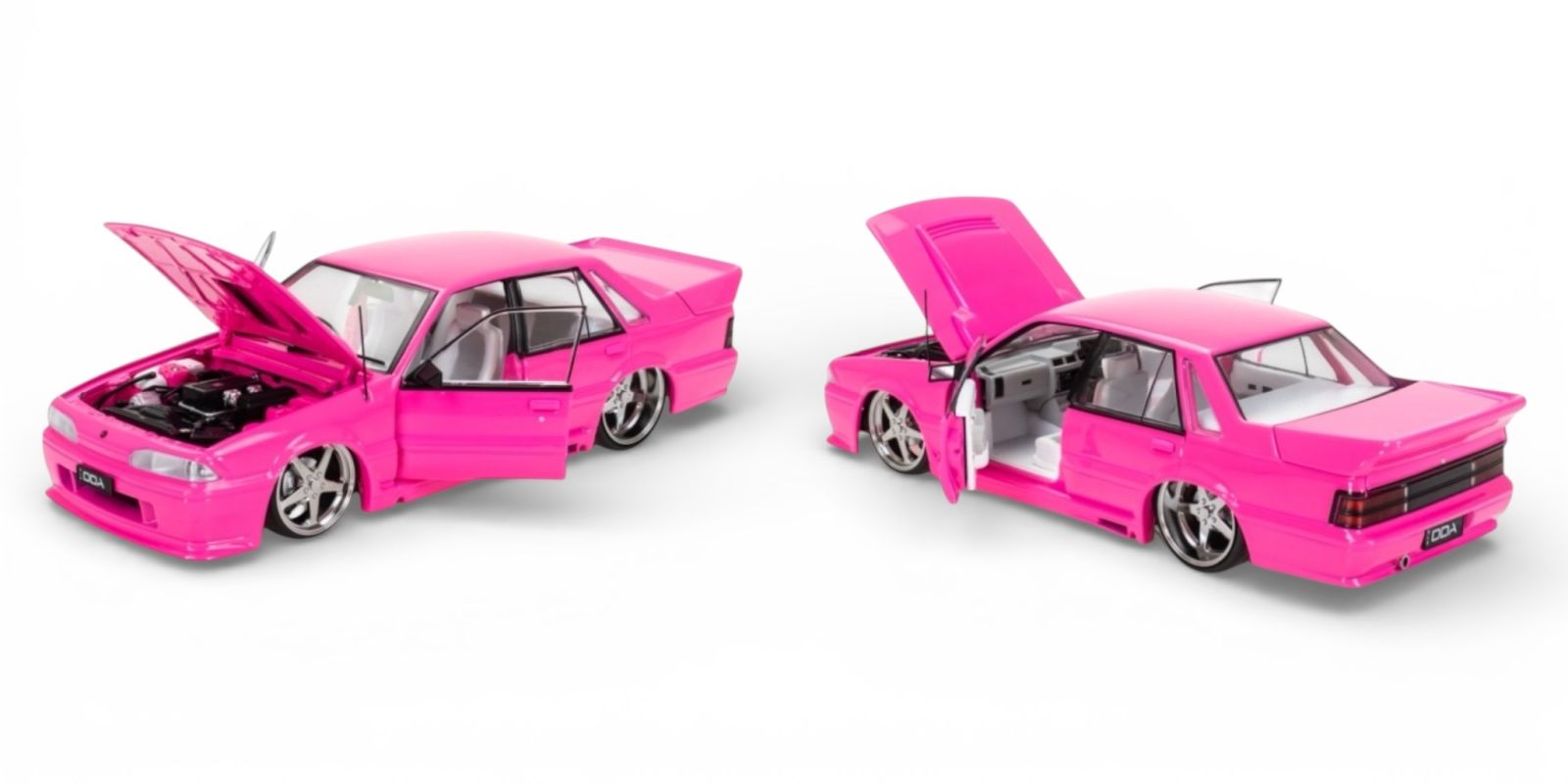
Release date: August 2025
Colour: Hot Pink
Engine: 5.0 litre Holden V8 engine
Wheels: Low profile chrome wheels
Chase variants: Only 3 to 5 percent of total production
Originally planned as a limited edition, this model was upgraded to core range status due to strong sales and popularity among collectors.
Silver Custom HSV VL Walkinshaw
Part of the Sfragismeno range by DDA Collectibles, this is a sealed body diecast model with opening front doors only.
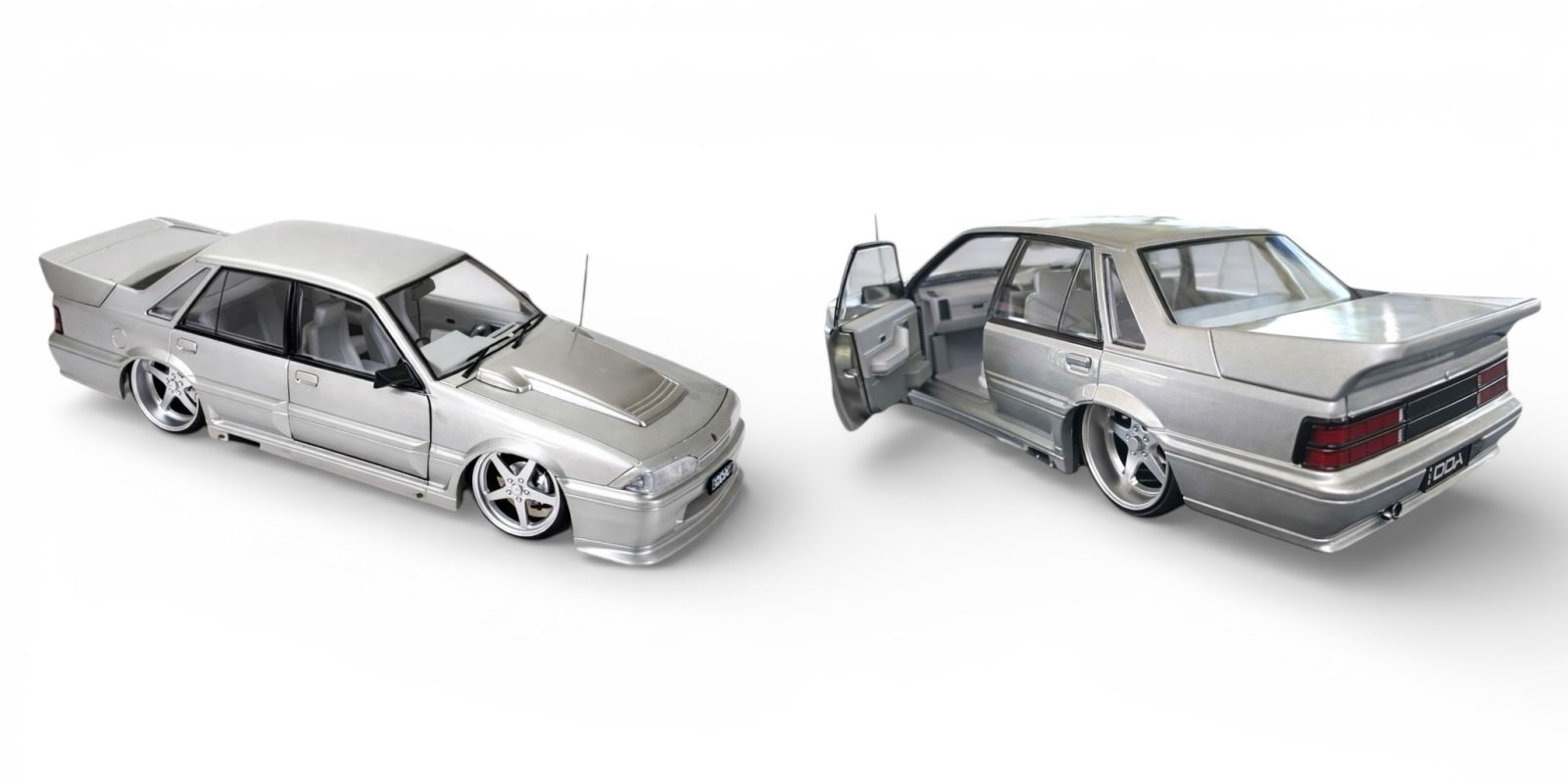
Release date: August 2025
Limited edition: 2,000 pieces
Colour: Silver
Engine: Sealed bonnet
Wheels: Low profile chrome wheels
Chase variants: Only 3 to 5 percent of total production
This limited edition model was available exclusively from Repco.
Light Blue Custom HSV VL Walkinshaw
Also part of the Sfragismeno sealed body range, this 1:24 scale model sold out extremely fast and is considered one of the most sought after HSV VL Walkinshaw models on the secondary market.
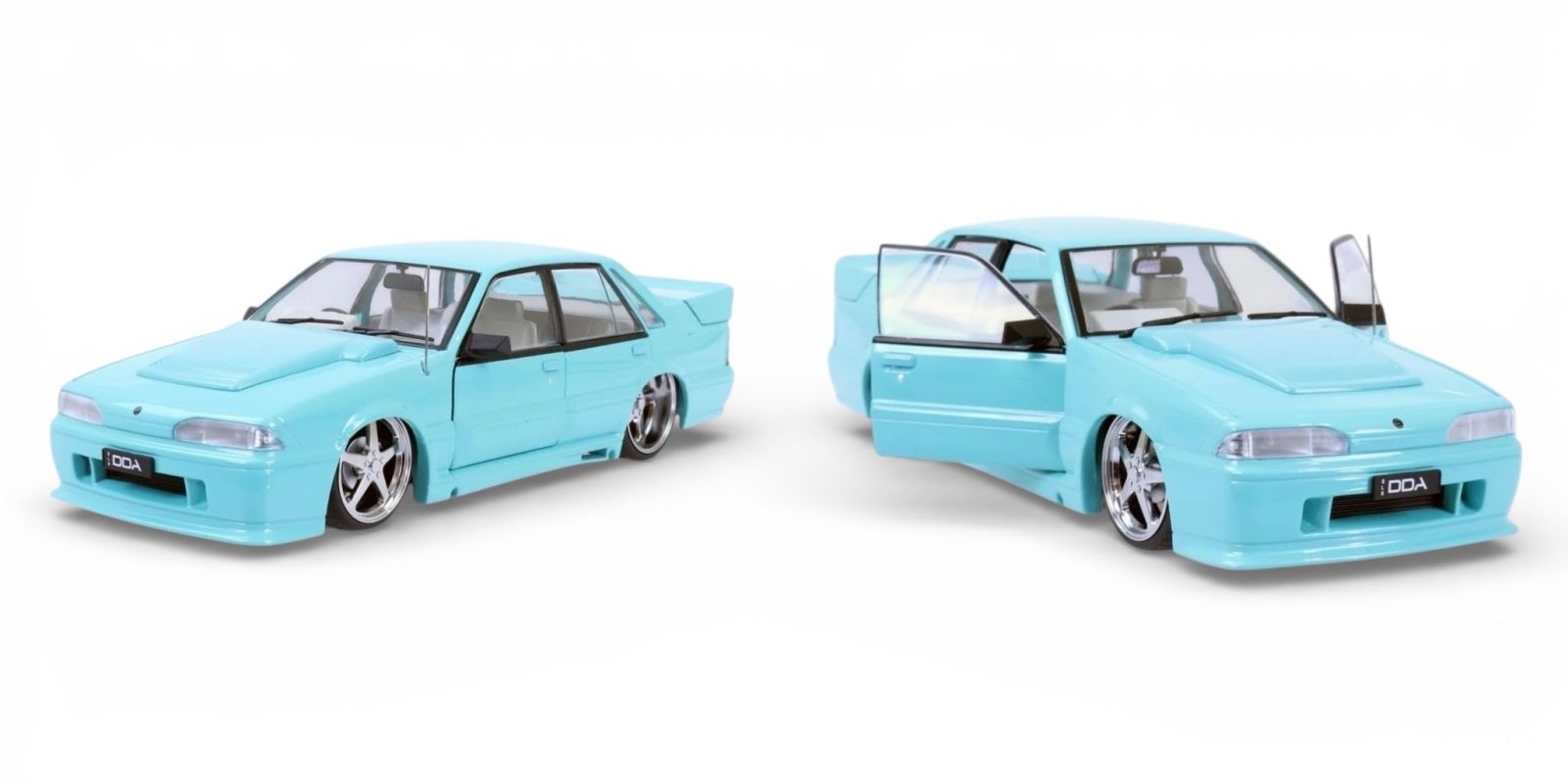
Release date: August 2025
Limited edition: 2,000 pieces
Colour: Light Blue
Engine: Sealed bonnet
Wheels: Low profile chrome wheels
Chase variants: Only 3 to 5 percent of total production
This limited edition release was available exclusively through Repco.
Formula Blue Custom HSV VL Walkinshaw 2025 Diecast Model Expo Exclusive
This extremely rare HSV VL Walkinshaw model car was created exclusively for the 2025 Diecast Model Expo and is possibly the most sought after 1:24 scale model in the entire DDA Collectibles range.
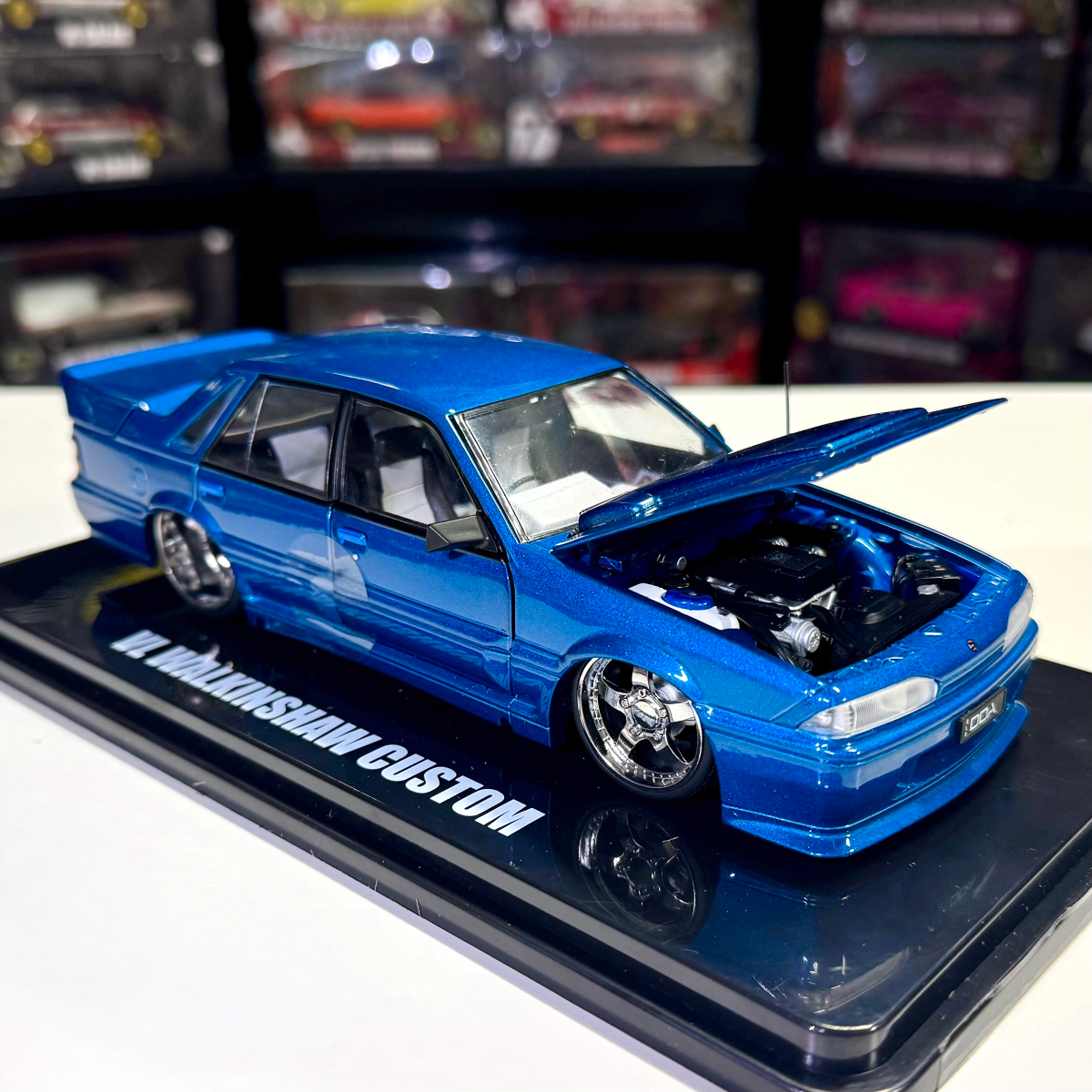
Release date: August 2025
Limited edition: 120 pieces
Colour: Formula Blue
Engine: 5.0 litre Holden V8 engine
Wheels: Low profile chrome wheels
Chase variants: No chase variants were produced
With just 120 produced, this is the holy grail of the HSV VL Walkinshaw diecast lineup.
HSV VL WALKINSHAW FUN FACTS AND FAQ's
How fast was the HSV VL Walkinshaw?
The VL Walkinshaw could sprint from 0 to 100 km per hour in around 6.5 to 7.0 seconds. That made it seriously quick for a late 1980s Holden VL Commodore.
Top speed was estimated between 230 and 240 km per hour, putting it right up there with the fastest Australian production cars of its time.
How much did the VL Walkinshaw weigh?
Kerb weight ranged from 1,360 kg to 1,415 kg depending on specification. For a 5.0 litre V8 powered Group A homologation car, that was a strong balance of weight and performance.
How much power did the VL Walkinshaw make?
The 5.0 litre V8 produced 180kW and 380Nm of torque.
It was the first locally produced Holden V8 fitted with electronic fuel injection.
Why was the VL Walkinshaw built?
It was developed to homologate the VL Commodore SS Group A SV for Group A competition.
Regulations required a minimum production run for eligibility.
What was HSV's first car?
The HSV VL Walkinshaw was produced between 1987 and 1988.
It was also the first car ever produced by HSV after the split with the Holden Dealer Team in 1987, marking the beginning of a new era following the Peter Brock HDT period.
Why is it called the Plastic Pig?
The nickname came from its 26 piece fibreglass body kit that dramatically altered the appearance of the VL Commodore.
Despite the criticism, the aerodynamic package was fully functional.
Who designed the VL Walkinshaw?
The car was styled by Peter Stevens, who later became famous for designing the McLaren F1.
His work on the HSV VL Walkinshaw helped create one of the most recognisable shapes in Australian motoring history.
Did the VL Walkinshaw win Bathurst?
Yes. The VL Walkinshaw secured victory at the 1990 Bathurst 1000, cementing its place in Holden racing history and proving the success of the homologation program.
How many VL Walkinshaws were built?
A total of 750 road going examples were produced between 1987 and 1988.
All were finished in Panorama Silver.
How much did a VL Walkinshaw cost new?
When first released, the VL Walkinshaw was priced at approximately $45,500.
That was serious money in the late 1980s and reflected its Group A racing connection.
What is a VL Walkinshaw worth today?
Today, the HSV VL Walkinshaw is considered one of the most collectible Australian performance cars.
Pristine low kilometre examples have sold for more than $1 million at auction.
Higher kilometre examples have been known to sell for well over $200,000, and restored cars with full documentation are highly sought after.
Can you modify a HSV VL SS Group A SV Walkinshaw?
Yes, performance modifications are possible. Common upgrades can include stroker kits, induction upgrades and transmission strengthening.
However, original matching numbers cars tend to command the highest values in today’s collector market, so many owners keep them factory correct.